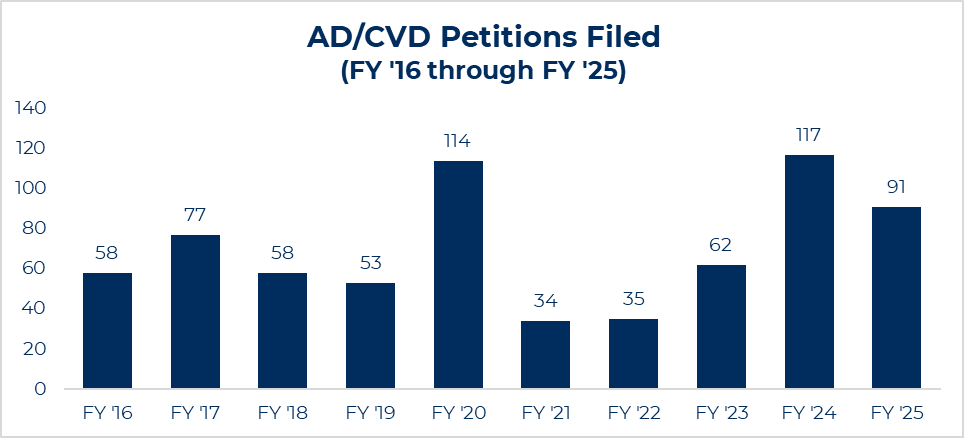
U.S. industries continued to turn to the antidumping (AD) and countervailing duty (CVD) laws at historic rates in Fiscal Year (FY) 2025. A total of 91 petitions were filed with the U.S. Department of Commerce and the U.S. International Trade Commission during the fiscal year that concluded on September 30, 2025. This number exceeds the average number of petitions filed annually over the last decade (approximately 70 per year) and represents the third most petitions filed in a single fiscal year over the last decade, exceeded only by FY 2020 and FY 2024.
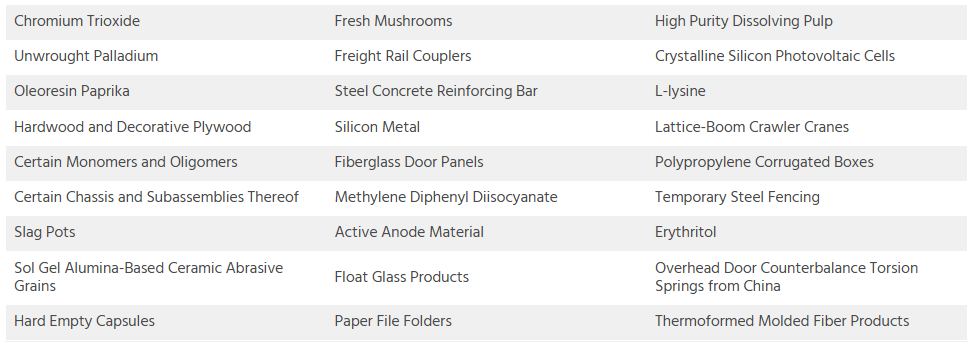
Notably, the activity in FY 2025 was not driven by a single sector; filing activity was broad-based across the U.S. economy. The 91 petitions were submitted on behalf of 27 separate industries—the greatest number of industries to file AD/CVD petitions in the past decade. These filings spanned markets as varied as metals, chemicals, agriculture, renewable energy, industrial machinery, packaging, and consumer products. Products covered included:
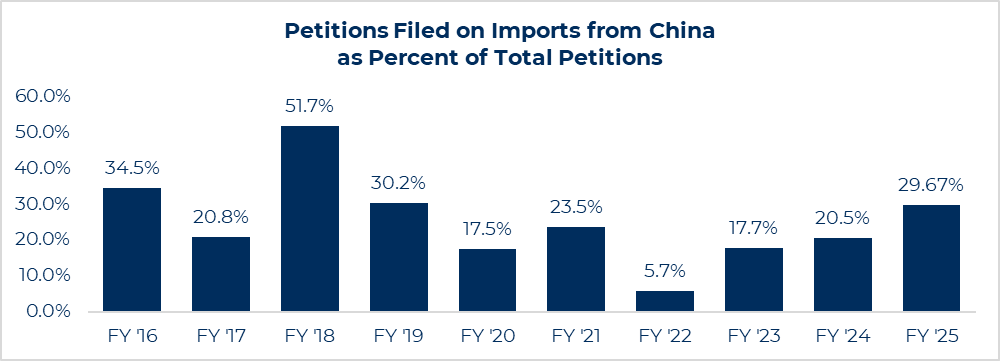
China remained a major focus of trade remedy activity. Of the 91 petitions filed in FY 2025, 27 (or approximately 30 percent) sought either AD or CVD duties on imports from China. This is slightly above the average percentage over the ten-year period between FY 2016 and FY 2025, but below the record percentage observed in FY 2018.
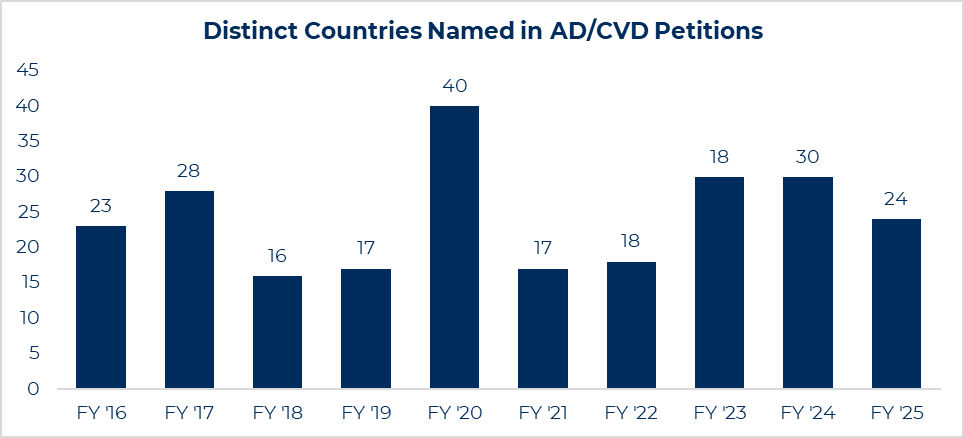
Overall, the 91 petitions filed in FY 2025 were submitted with respect to imports from 24 different countries. Roughly 15 percent of the total AD/CVD petitions filed in FY 2025 sought AD/CVD duties with respect to imports from countries that have generally not been subject to this type of trade relief, including Algeria (0 existing AD/CVD orders), Angola (0 existing AD/CVD orders), Bulgaria (1 existing AD/CVD order), Czechia (1 existing AD/CVD orders), Laos (0 existing AD/CVD orders), Norway (0 existing AD/CVD orders), and Sri Lanka (0 existing AD/CVD orders). This expansion suggests that industries are increasingly seeking trade relief across a wider set of trading partners, at least in part due to China’s Belt and Road Initiative.
Looking ahead, the petition landscape in FY 2026 may look different. The 43-day government shutdown at the beginning of FY 2026 means that no new petitions were filed in the first 1.5 months of the new fiscal year. Future filing activity may also be shaped by the Administration’s emerging trade policies, including President Trump’s Liberation Day reciprocal tariffs and actions taken under other tariff authorities. As these policies take shape, petition activity in FY 2026 will likely reflect how U.S. industries adapt to a shifting global trade environment.